

A featured contribution from Leadership Perspectives: a curated forum reserved for leaders nominated by our subscribers and vetted by the Construction Tech Review Advisory Board.

Foodpanda
The modern CFO, a Digital Superhero
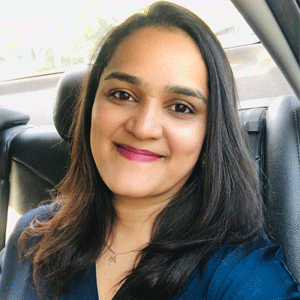
Mitsu Doshi
From scorekeeper to a strategic partner:
Traditionally perceived as "bean counters", the modern age CFOs are fast evolving as strategic advisors to the Board. The future of finance lies with finance leaders who think like entrepreneurs and aim at creating wealth beyond the balance sheet. Today's economic environment is volatile, ambiguous, risky and disruptive. By the time the numbers are reported, they are old already. What the CEO expects is intelligence emerging from the present data to alter business decisions for tomorrow. This expectation is not unreasonable given that with increased innovation and evolving alternative variables, business models are transforming, product life cycles are becoming shorter, the competitive landscape is furious and decisions need to be taken quicker. In this information age, there is an understandable need to operate with speed and efficiency along with intellectual prowess. While the intellect is largely a human skill, digitization backed by RPA and AI equips the finance function with superpowers that translate data into useful information at a much faster pace than before. Digital finance is truly bringing unprecedented opportunities to forward-thinking CFOs allowing them to create value in their business in ways which were to a large extent just "aspirational" in the past. Armed with this power of information, the focus is on future. The modern age CFO is comfortable discussing a new operational opportunity in the morning, modelling scenarios in the afternoon and drawing new business strategies by evening. To sustain this pace of delivery and decision making there is an realistic need for strategic agility as well as strong risk management framework. Balancing speed and sustainability is on every CFOs agenda as the struggle scales with challenges around financial governance, compliance and crime.
Defending against Crime:
There is plenty of room for innocent mistakes and intentional crime in an environment that thrives on pace. Digitisation rolls out a red carpet for opportunistic fraudsters. No business can really escape from the risk of fraud and corruption. As long as humans (and not machines) are running businesses, corporate misconduct is here to stay. There is increased internationalization to penetrate new markets, and deliberate localisation to cater to local market demands which brings promising benefits in terms of growth, revenue, and economies of scale.
In this information age, there is an understandable need to operate with speed and efficiency along with intellectual prowess
These unchartered territories trigger unknown risks. With digitisation, our supply chains are increasingly transparent which further complicates the risk scenario. The criminal ecosystem is changing. In the past, management largely worried about asset misappropriation as a risk, but today, intangible data is stolen and the invaders are invisible. Cheating to a computer screen or lying to a sheet of paper is way more easier than robbing a bank. Companies, governments, and individuals have all been victims of cybercrime. Everyone is living a life online, whether it is to share holiday experiences on social networks or managing operational information on a cloud. With technology, crime got more sophisticated and complex to detect, but easier to commit. The truth is that technology is a slave of its user and innovation is at everyone's disposal. It helps criminals as much as it aids people who are actively fighting crime or trying to stay clear of crime. There is an inevitable need to understand how the changes brought by the new digital age affects our companies in terms of our vulnerabilities and potential threats.
The risk-return trade-off today, in light of new opportunities is more interesting than ever. Against this challenging backdrop, the dynamics of demand have changed. Strategic stakeholders expect more frequent and transparent information about the risks and opportunities that lie ahead. In times like this, an organization's intrinsic strength plays a role. Where does this strength stem from? The answer is robust corporate governance frameworks which encourage sound business judgments via collective intelligence, collaboration and effective implementation of risk mitigation frameworks. Our internal control frameworks need to incorporate the power of technology to be able to fight threats that are not only complex but are evolving by the day. The power of digitization is profound, if embraced correctly. For companies riding this wave of digitization, if the emerging threats are not handled with due care, the consequences could be devastating. The new age CFO adopts automation to improve business processes but at the same time carefully assesses his organizations' vulnerabilities in light of its digital footprint.
Closing words:
A CFO's office has always been associated with the integrity of the numbers. People believe the story we tell. Our story needs to make “sense", a story that not only contains elements of growth and wealth creation, but also an assurance on the steps we take to protect ourselves from the risks that come with the uncertain business landscape. Like the famous quote goes "Heroes are made by the paths they choose, not the powers they are graced with”. It’s the character and the responsibility that makes one a superhero. Digital transformation empowers us with speed, automation and artificial intelligence but cannot replace human values and intuition. A sound CFO does not rely blindly on data, but consciously applies common sense to everything that comes his way. Data is after all, just facts and facts can presented in ways that can twist the truth. As custodians of the financial statements we communicate with stakeholders via numbers, a universal language that everyone understands. It's the collective responsibility of the company's management board to ensure that the story behind the numbers is sound and can be trusted.
